Anonymous learning data leaves your browser in this version. This module keeps a record of what you do so it can show you your own before-and-after at the end — and this measured build also sends that record, under a random anonymous ID with no personal information, to a learning record store so the designer can see how the module performss.
What it keeps
- which screens you reached, and when
- your answers to the two opening questions and the four closing ones
- which carton you put in the cart, and the reason you gave
- whether you turned the cartons over, opened the label help, or expanded a callout
- how far you looked along the aisle
- whether narration was switched on
- which commitment card you picked, if any
You can download or delete the whole record on the last screen.
The back of the carton
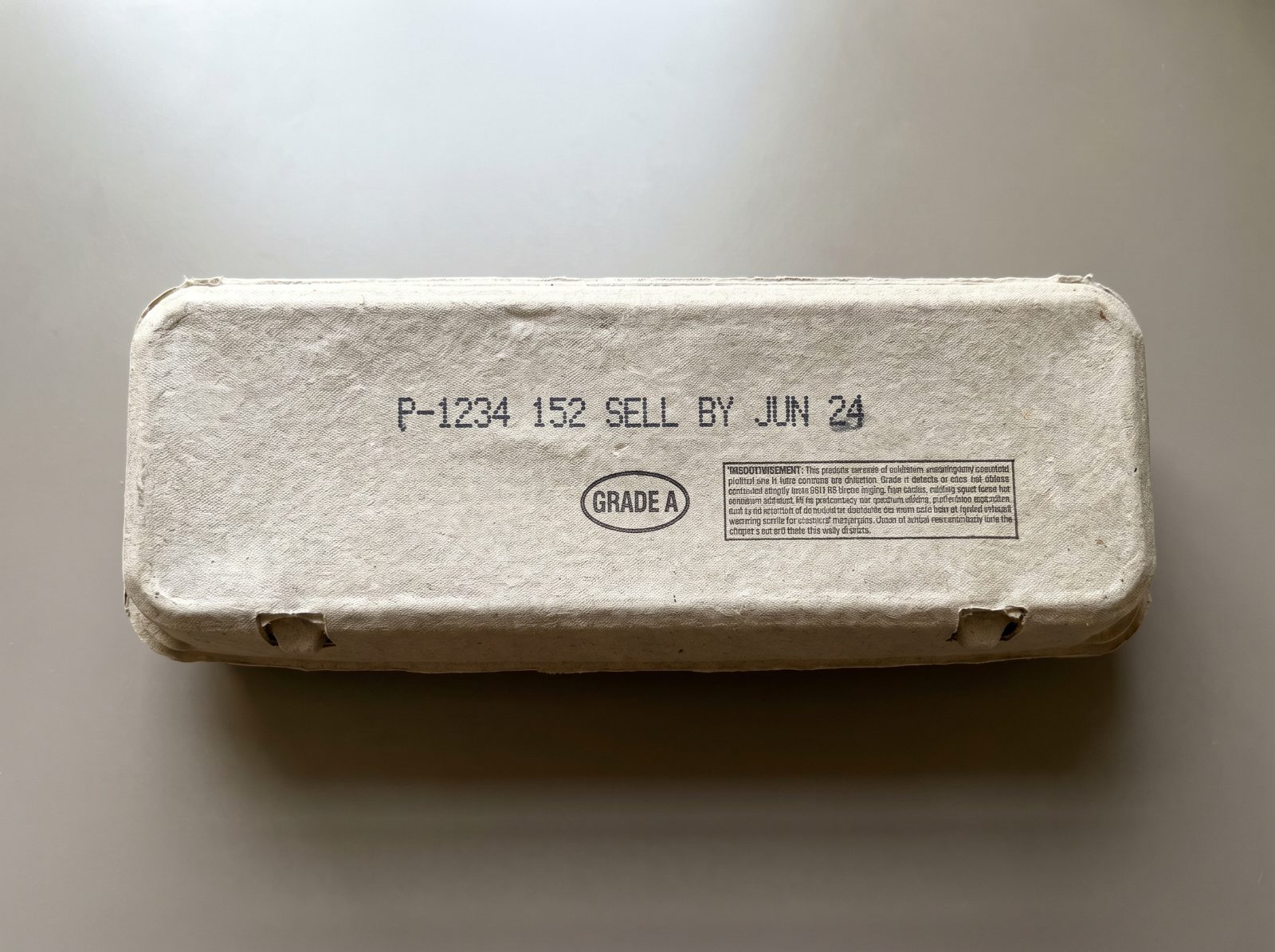
Plant code, Julian pack date, sell-by date, grade shield. No housing information.
Defined — there's a rule behind it
Tells you nothing about this carton
Farm Fresh · All Natural · Happy Hens — no rule behind them.
No Hormones Added — regulated, but true of every carton, so it can't separate one from another.
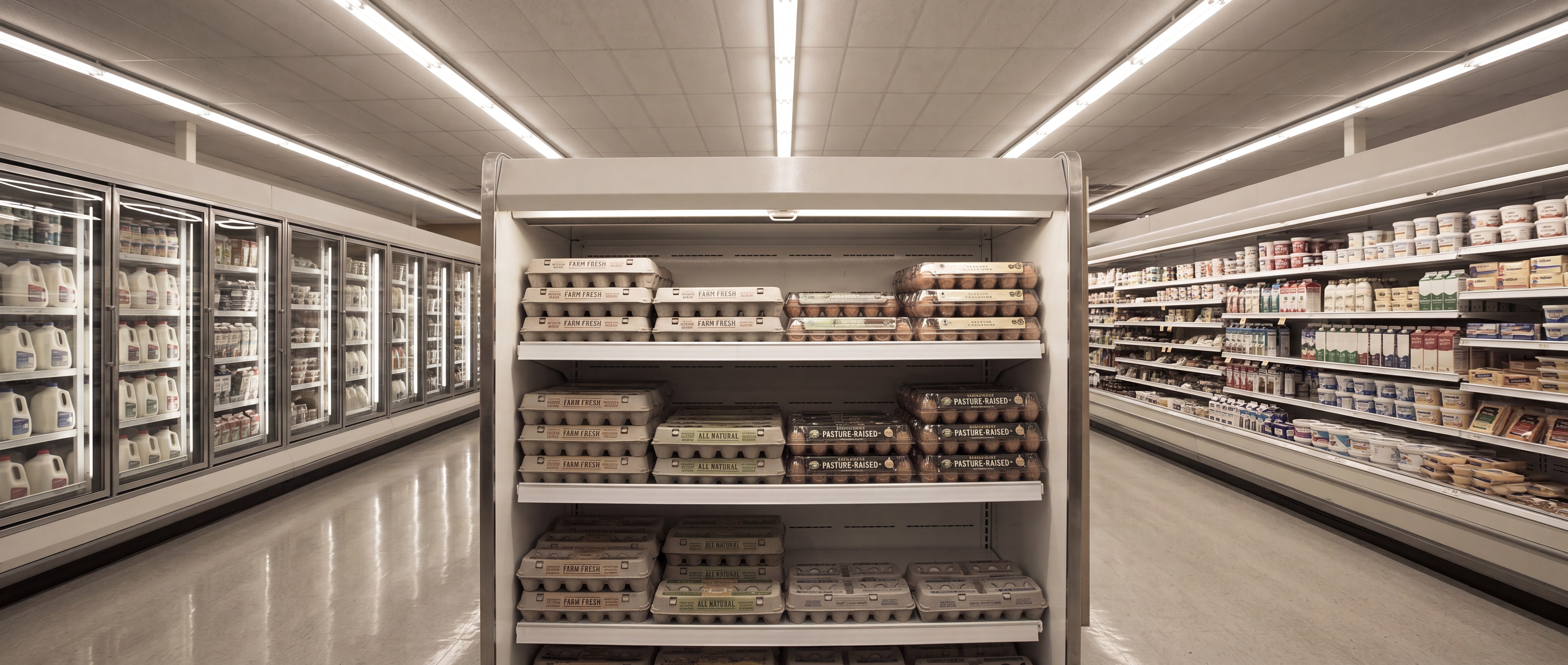
Tuesday evening. Fourteen cartons of eggs sit in front of you.
Every single one says something friendly.
Transcript
You're in the egg aisle after work. Fourteen cartons, and they all look kind. Farm fresh. All natural. Happy hens. Cage-free. Pasture-raised. One of them costs a dollar sixty-seven. One of them costs seven forty-six. And standing there, you have to decide what the difference actually is. Here's the thing most people don't know, and it's the reason this aisle is so confusing: in the United States and Canada, nothing on that carton is required to tell you how the hen lived. Not the code. Not the grade. Nothing. Whatever housing information you get, a company chose to print — or chose not to. Before we start, two quick questions. There's no score here. Wherever you are is just where we begin.
Two guesses before we start. You're not meant to know these yet — the whole course is the answer. You'll see both again at the end.
"In the US and Canada, egg cartons must state how the hens were housed."
You'll see this one again in a minute.
"A carton reads Farm Fresh · All Natural · No Hormones Added. What does that tell you about how the hens lived?"
You'll see this one again in a minute.
{{ gate1 }}
Turn it over. The code tells you which plant packed it, and on what day.
It tells you nothing about the hen.
Transcript
Turn the carton over. There's a code stamped on the end, and it's genuinely useful — just not for what you'd expect. The P-number is the USDA-inspected plant that packed these eggs. That's your recall lookup, your traceability. Next to it, three digits: the Julian date. Day one is January first, day three-sixty-five is New Year's Eve. That's the day they were packed — not the day they were laid. Then the sell-by date, which on a USDA-graded carton runs up to thirty days from packing, and the USDA says the eggs stay good for four to five weeks past that packing date. And the shield — Grade AA, A, or B. That grade is about the shell, the white, and the yolk. Physical quality. It says nothing about welfare, nothing about housing, nothing about nutrition. So: plant, date, freshness, quality. Four pieces of information, and not one of them is the hen. Remember that first question? That's the answer. There is no mandatory housing disclosure on a North American egg carton.
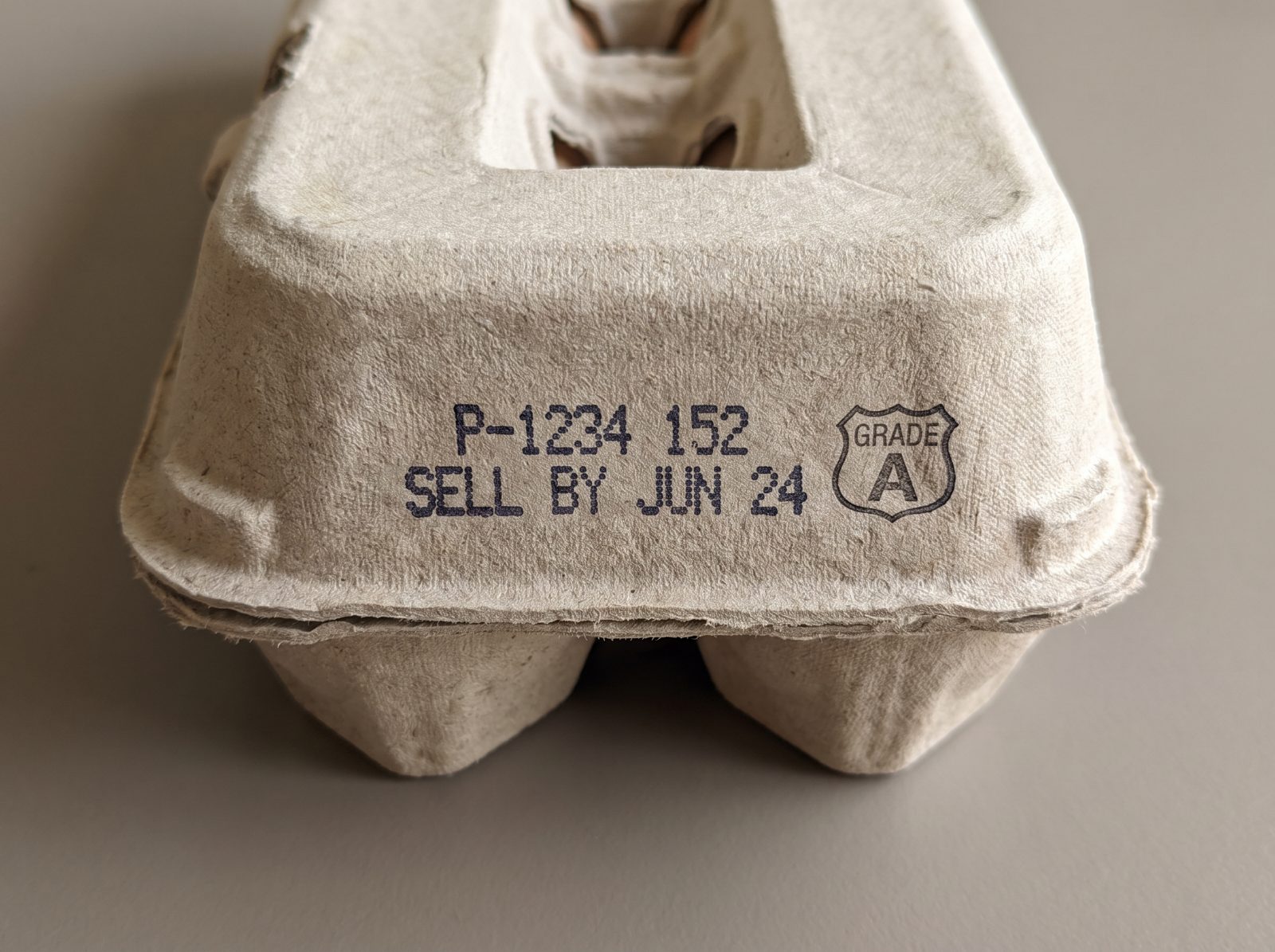
{{ loupeRead }}
Match each part of the code to what it guarantees.
Read that one again.
Nothing on the back of this carton fills that slot.
🇨🇦 In Canada — tap to see what changes across the border
Same gap. Canadian cartons carry a grade and a best-before date, and federal and provincial law set no welfare-labelling standard at all. Housing words are industry terms, not legal ones.
{{ gate2 }}
So the housing information lives on the front — in words.
Some of those words have a rule behind them. Some tell you nothing.
Transcript
If the back can't tell you, the front has to. And on the front there are two kinds of words. Start with the defined ones. Cage-free means the hens live indoors without cages, with unlimited access to food, water, and room to move — that's a USDA definition. Indoors, though. No outdoor access. Free-range is cage-free plus access to the outdoors — but nobody regulates how much space, for how long, or what's underneath. A small door onto a concrete yard qualifies. Pasture-raised still has no USDA definition. What changed in 2025: on a USDA-graded carton, the claim now has to be backed by a recognized third-party certifier. Organic covers organic feed and no antibiotics, plus outdoor access — with the same open question about what that access looks like. Now the other kind. Farm fresh. All natural. Happy hens. Nobody regulates any of those. They mean whatever the printer set in type. And hormone-free? Hormones have never been approved for US egg production — they’ve been prohibited since the late 1950s. Every egg in that aisle is hormone-free. It's true, and it tells you nothing. Here's the part worth carrying out of this aisle: warm words are free to print. Defined words carry a rule behind them.
Defined — there's a rule behind it
Cage-Free
Indoors, no cages
Free-Range
+ outdoor access — quality unregulated
Pasture-Raised
+ pasture; 3rd-party cert required on USDA-graded cartons
Organic
Organic feed + outdoor access
Tells you nothing about this carton
Farm Fresh
No rule behind it
All Natural
No rule behind it
Happy Hens
No rule behind it
No Hormones Added
regulated — and true of every carton; a disclaimer is required beside it
Tap each label to see what changes — and what doesn't.
🇺🇸 Cage-Free — hens roam inside the barn, not in cages. The door stays closed: no outdoor access is required. The grass in the window is real. Their access to it isn't.
🇨🇦 Free Run — the Canadian word for the same barn. Open floor, no cages, and no outdoor access, despite how "run" sounds. Same picture. Different label.
Honest picture: commercial cage-free barns house hens at roughly 1–1.5 sq ft of floor per bird — the dashed square is one hen's entire share. Verified claim on USDA-graded cartons (audited twice a year).
Honest picture: defined by industry code of practice (NFACC), not by CFIA regulation. If the carton says Free Range instead, outdoor access is added — weather permitting, in a Canadian winter.
Square feet of space per hen
Step through the labels one at a time.
Floor space per hen (sq ft)
Tap any bar to jump straight to it.
{{ stageHead }} {{ stageBody }}
* "Pasture-Raised" has no legal definition on its own in either country. The 108 sq ft figure is the Certified Humane standard — the number only holds if that seal is on the carton.
Sort the phrases
Drag each phrase into a zone — or tap a phrase, then tap a zone.
{{ s3msgTxt }}
Open all four seals — they don't agree with each other.{{ sealCount }}
Certification marks are shown for identification and educational purposes only. This module is not certified, endorsed, or affiliated with any certification program.
{{ gate3 }}
Transcript
Step back from the aisle for a second, because the size of this thing is what makes a label worth reading. Right now, roughly three hundred million hens are laying eggs in the United States. For scale, that's close to one hen per person in the country. And laying hens are the smaller number — around nine billion broiler chickens are raised and slaughtered for meat in the US every year. Nine billion. In Canada, about eight hundred sixty-three million land animals were slaughtered in 2024, and the overwhelming majority of them were chickens. These are estimates from industry and government tallies, and the exact figures move. But the order of magnitude doesn't. Three hundred million hens, and the only consumer-facing window into how any of them live is a phrase on a carton that nobody is required to print.
How many laying hens do you think are in US flocks right now?
Drag the slider to your best guess, then submit. Most people guess low.
Log scale · 1,000,000 – 3,000,000,000
{{ slLabel }}
About 300 million hens are laying eggs in the US right now.
About 9 billion broiler chickens are raised and slaughtered each year.
Most people put the number lower.
Your estimate: {{ slEstLabel }} · Actual: about 300M
US population ~340M
Laying hens ~300M
1 block = 20 million · US · 2024 · approximate · Sources: USDA NASS chickens and eggs report; USDA AMS cage-free shell egg report
🇨🇦 In Canada — tap to see what changes across the border
About 863 million land animals were slaughtered in 2024. Canada also produced a record 997 million dozen eggs in 2025.
{{ gate4 }}
In June 2025, 45.7% of US hens lived cage-free — up from under 5% in 2010.
In Canada, about 80% are still in cages.
Transcript
Now the part that surprises people. As of June 2025, forty-five point seven percent of US laying hens lived cage-free — about a hundred thirty million birds. In 2010 that number was under five percent. So the American egg aisle has genuinely moved, and it moved fast. Cross the border and the picture inverts. In Canada, roughly eighty percent of hens are still in cages — that's advocacy-group analysis from 2024 and 2025, and it puts Canada behind the US at around fifty-five percent caged, behind the EU at thirty-eight, and well behind the UK at twenty-one. Canada's egg industry has committed to phasing out conventional cages by 2036 — but that commitment keeps enriched cages, which are still cages. Why does this matter at the shelf? Because the same three words on a carton sit on top of very different baselines depending on which country printed it. In the US, cage-free is close to half the market. In Canada, it's still the exception.
What share of US laying hens do you think are cage-free today?
Pick the share you'd guess.
Lighter fill = conventional cages, darker hatch = enriched cages — labels, not colour alone.
2016 industry announcement → 2036 conventional-cage phase-out — enriched cages remain
🇨🇦 In Canada — tap to see what changes across the border
The 2036 industry target retires conventional cages. Enriched colony housing stays. Canadian retailers, including major grocers, missed their 2025 cage-free commitments and declined to set new deadlines.
{{ gate5 }}
Moving hens out of cages is estimated to cut time in "hurtful" pain by about 57%.
It also introduces new risks. Both are true.
Transcript
So does getting hens out of cages actually help? The best modelling we have says yes, substantially. The Welfare Footprint Project estimates that moving a hen from a conventional cage to an aviary system cuts her time in disabling pain by about sixty-four percent, and her time in hurtful pain by about fifty-seven percent. Those are modelled estimates built from published literature, not field measurements — worth holding loosely. And here's the honest other half. Cage-free isn't better on every axis. An Ontario survey found keel bone fractures — that's the breastbone — in forty-eight percent of hens in cage-free housing, compared to about twenty-five percent in cages. Birds that can move can also collide and fall. But that's not the end of the story either. A 2021 study pooling data from sixteen countries found the mortality gap closing as producers gain experience — roughly half a percentage point of improvement for each year a farm has been running cage-free. Put it together and you get something more useful than a slogan. Cage-free isn't a switch you flip. It's a switch plus the skill to run it. The direction of total suffering still points one way.
What improves
What gets harder
Keel-bone fractures — Cage-Free 48.3%
Caged 24.8%
Ontario survey
More operating experience → mortality gap closes (Scientific Reports 2021)
Optional: open this if you want to know how solid these numbers are.
Where these numbers come from — and what they can't tell you
- The Welfare Footprint estimates are modelled from published literature, not field measurements.
- The Ontario keel-bone survey is a single-region, cross-sectional study.
- The 2021 pooled analysis is observational — it shows association, not cause.
- Management capability differs between housing systems and confounds all three.
- All three sources are flagged for source-document re-checking before publication.
🇨🇦 In Canada — tap to see what changes across the border
The keel-bone data on this screen is Canadian: an Ontario survey of commercial flocks.
US and EU corporate cage-free campaigns: an estimated 9 to 120 chicken-years affected per dollar spent.
Of the commitments due in 2025, about 48% were met.
Transcript
Here's why cage-free became the campaign that everyone runs. Rethink Priorities looked at US and European corporate campaigns from 2005 to 2018 and estimated that each dollar spent affected somewhere between nine and a hundred twenty years of chicken life. That range is more than twelvefold, and the reason is honest uncertainty — analysts disagree about whether campaigns caused changes or merely accelerated them, and the assumed follow-through rate ranges from forty-eight to eighty-four percent. Which brings us to the follow-through. McDonald's pledged one hundred percent cage-free in 2015, and the dominoes fell — two to three hundred US companies, every one of the top twenty-five grocery chains. McDonald's US actually hit its target two years early. But by the 2025 deadline, of four hundred fifteen commitments coming due, about a hundred ninety-eight were fulfilled. That's roughly forty-eight percent. Sixty-one were delayed, and fifty companies dropped their pledges entirely. So: pledges move a lot of birds, and about half of them arrive on time. Which is a real answer to “does buying differently matter” — it's the demand signal underneath the pledge that keeps the deadline alive.
One dollar given to a cage-free campaign is estimated to buy 9 to 120 chicken-years — one chicken-year being one hen, living one year, out of a cage.
That is a thirteen-fold spread. It is the honest width of the estimate, not a rounding — nobody publishing this work claims a single number.
estimate · US & EU campaigns 2005–2018 · Rethink Priorities 2019
415 commitments due in 2025
The near future on this chart is the grey block. 106 companies did not report either way — whether they ever do is the next thing that happens here.
The 61 delayed: delayed, with no new date given in the press summary this figure comes from.
press summary of EggTrack 2025 — report PDF pending verification
Tap each point on the timeline.
{{ n.t }}
{{ tlLine }}
{{ tlUrl }}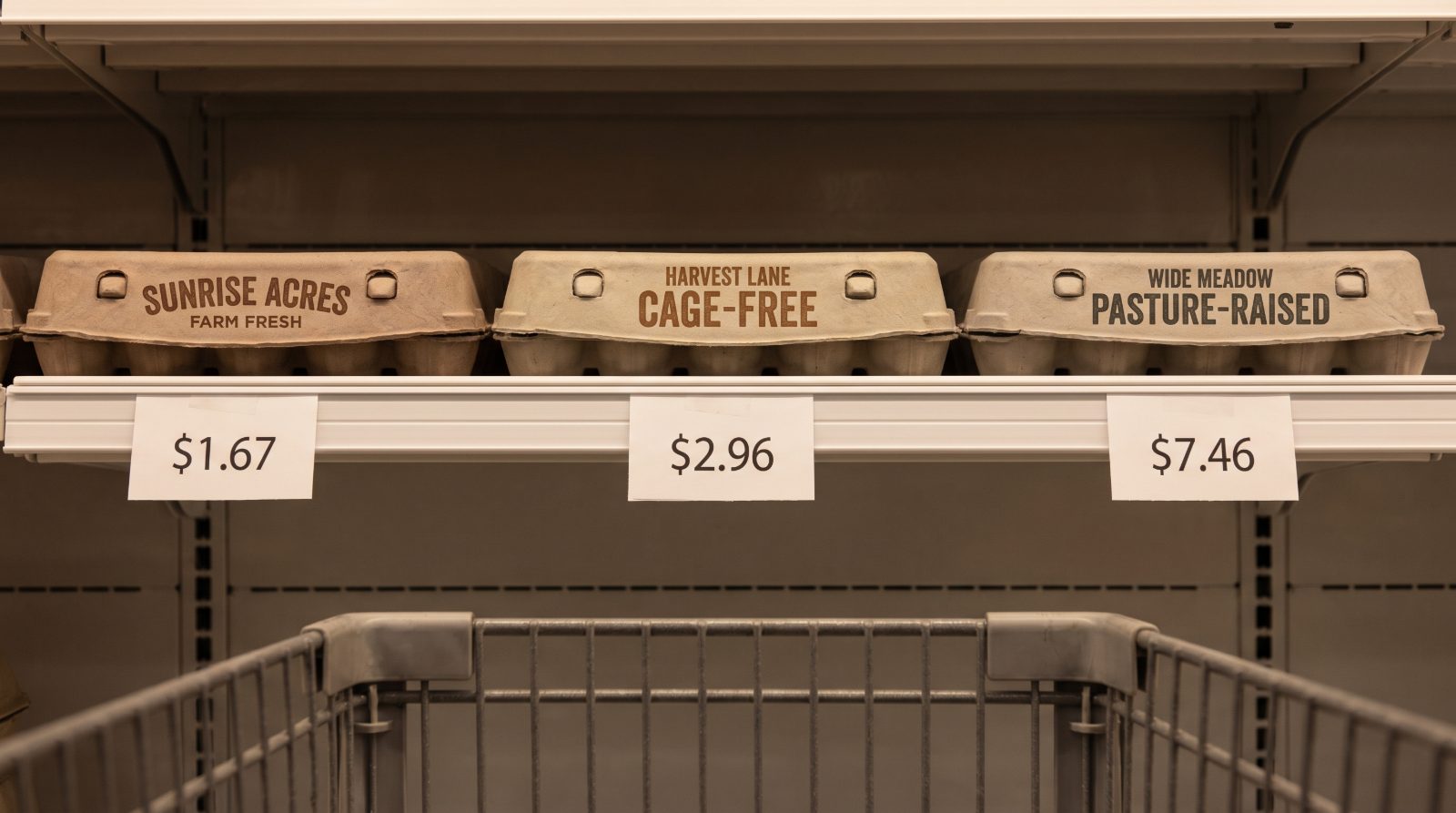
Same aisle. Same friendly words. This time you know what they mean.
Three cartons. You can pick any of them up. Read the back of all three before you choose.
Transcript
Back to the aisle, and money is tight this week. Three cartons in front of you. Sunrise Acres, a dollar sixty-seven — the front says farm fresh, all natural, no hormones added. Harvest Lane cage-free, two ninety-six, with a Certified Humane seal. Wide Meadow pasture-raised, seven forty-six, also Certified Humane. There's no right answer here. But before you decide, you can pick each one up and read it.
Illustrative products. Brands are fictional; prices reflect observed US shelf prices.
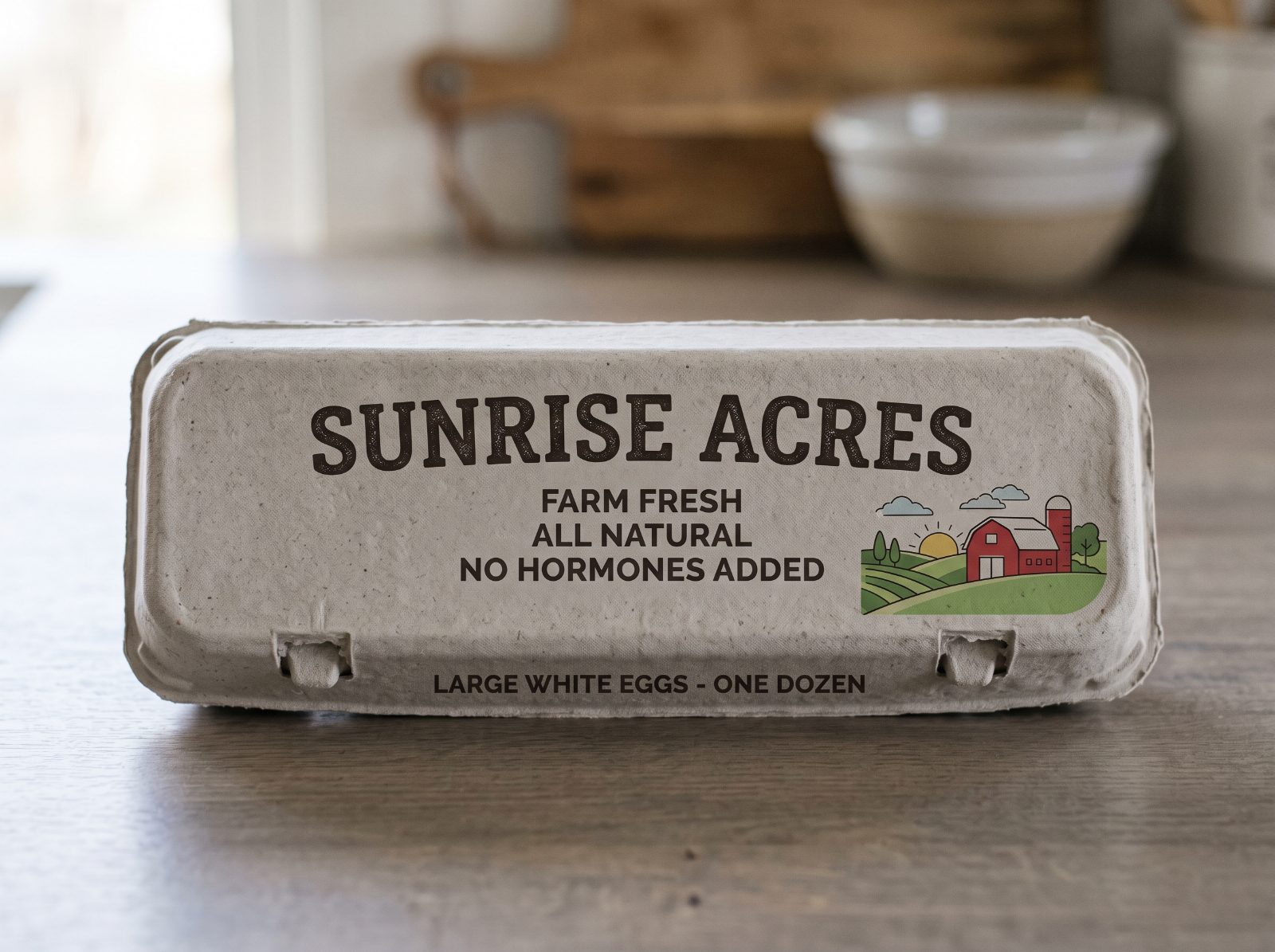
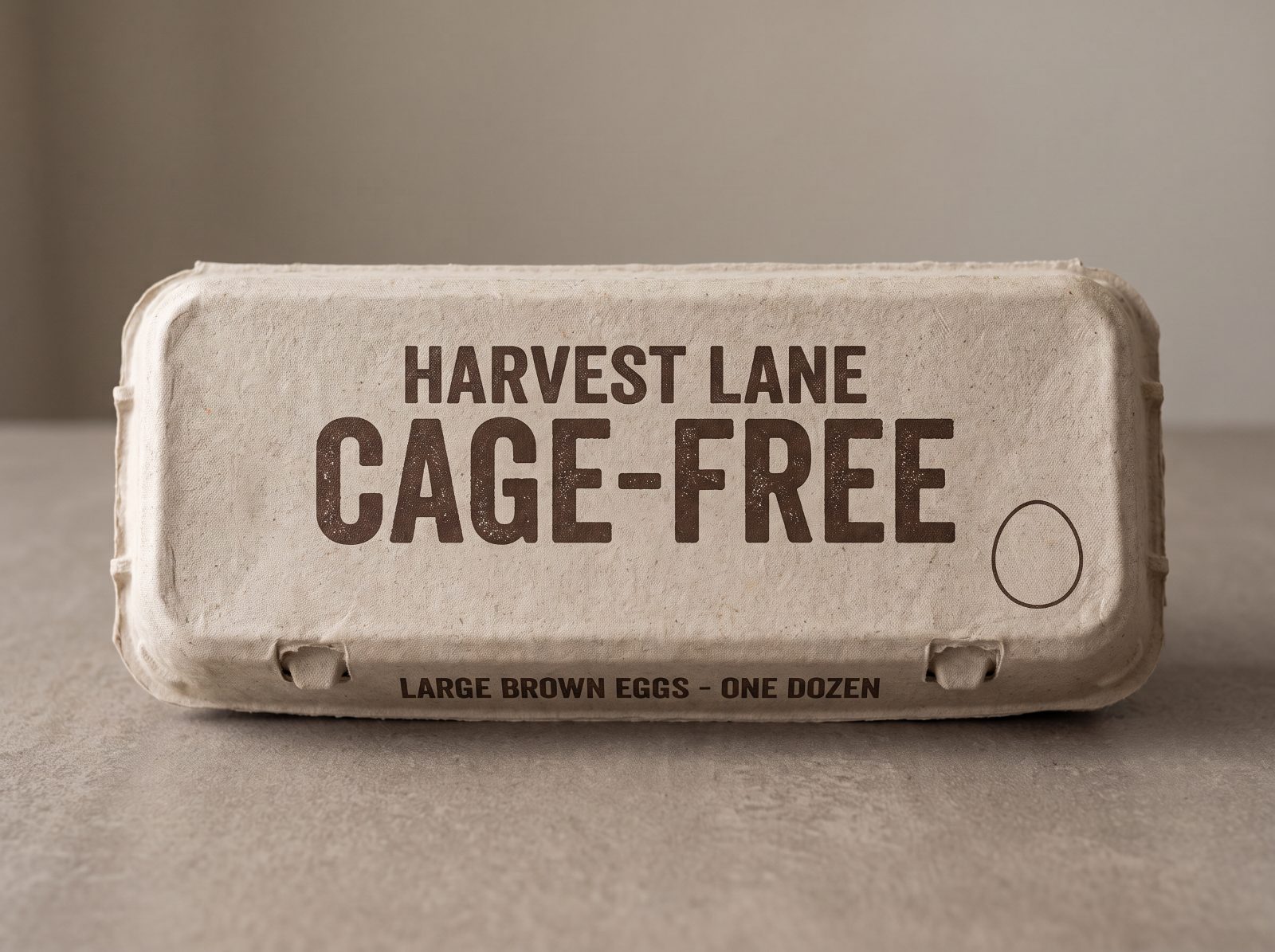
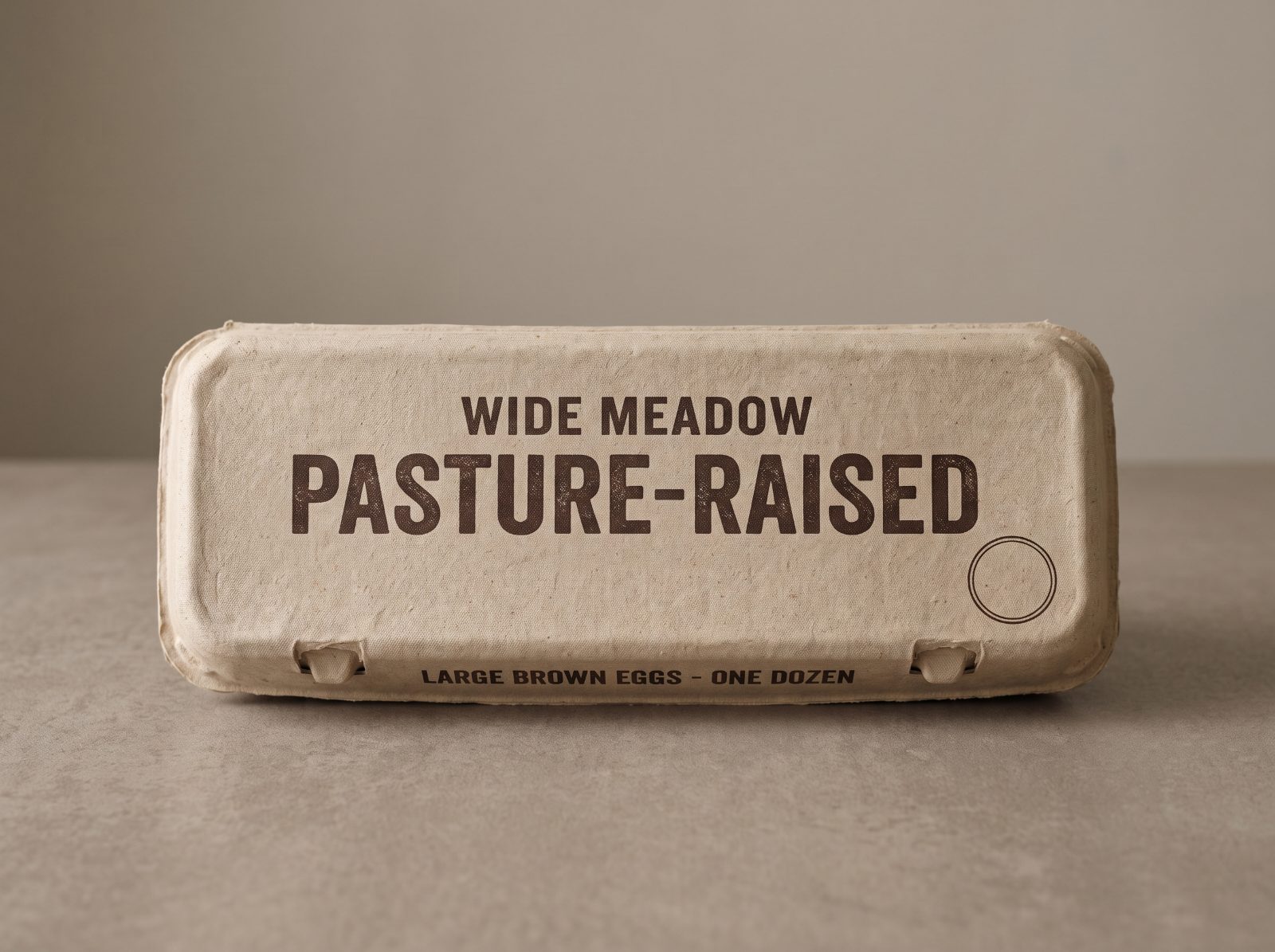
{{ c.brand }}
{{ c.claim }}
What goes in the cart?
Then tell us why — pick the reason closest to yours.
Transcript
Pick one. Then pick the reason. What this module is watching isn't which carton you chose — it's what you chose it on.
Then tell us why — pick the reason closest to yours.
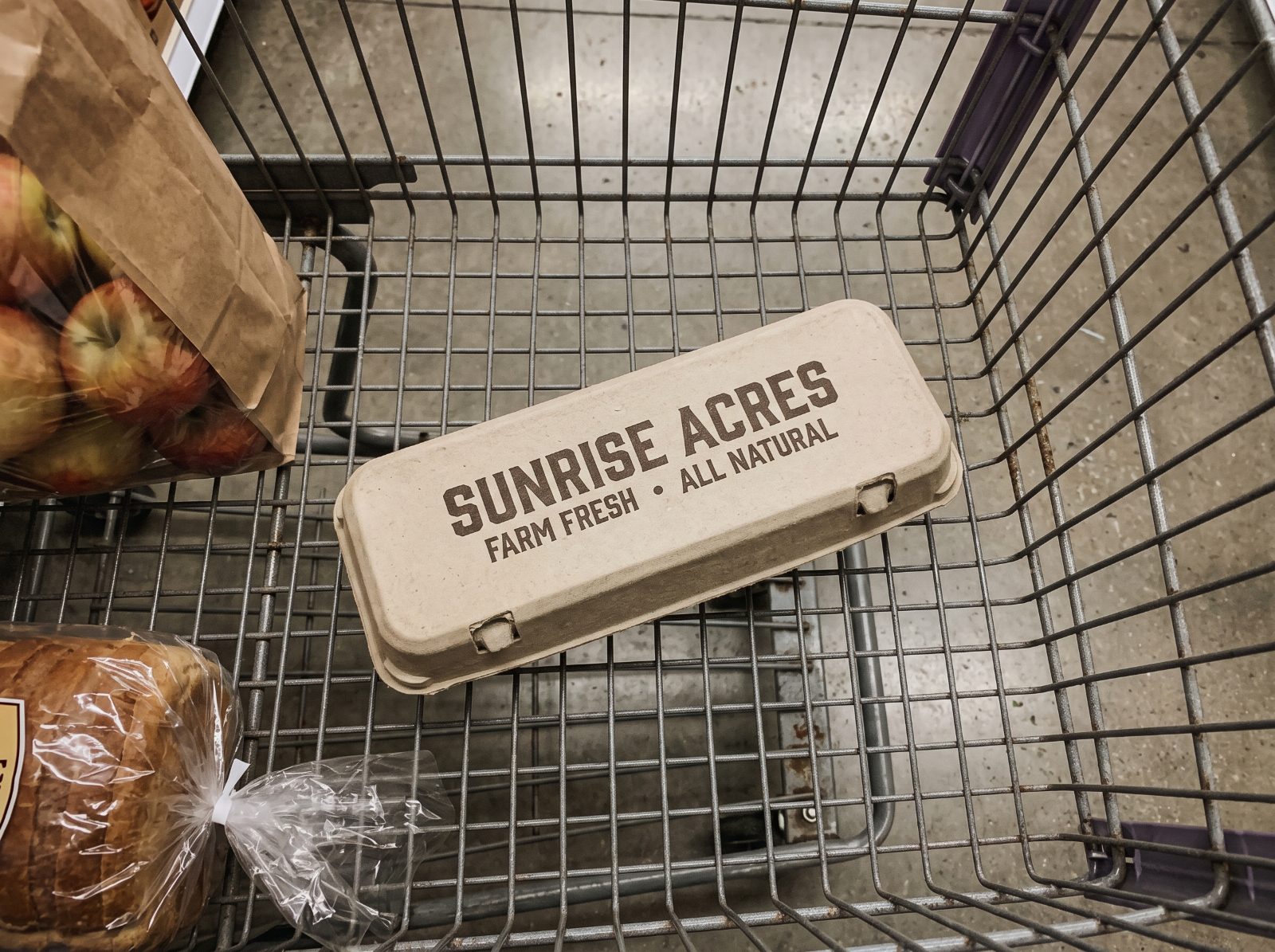
{{ head10A }}
You know that now.
Transcript
Budget is a real constraint and a legitimate reason. What's different is that you walked away knowing what this carton does and doesn't say. Next week that carton will look different to you, whether or not you buy it.
Before checkout — what does this carton tell you about how these hens lived?
Back of carton: P-1234 · 152 · SELL BY JUN 24 · Grade A
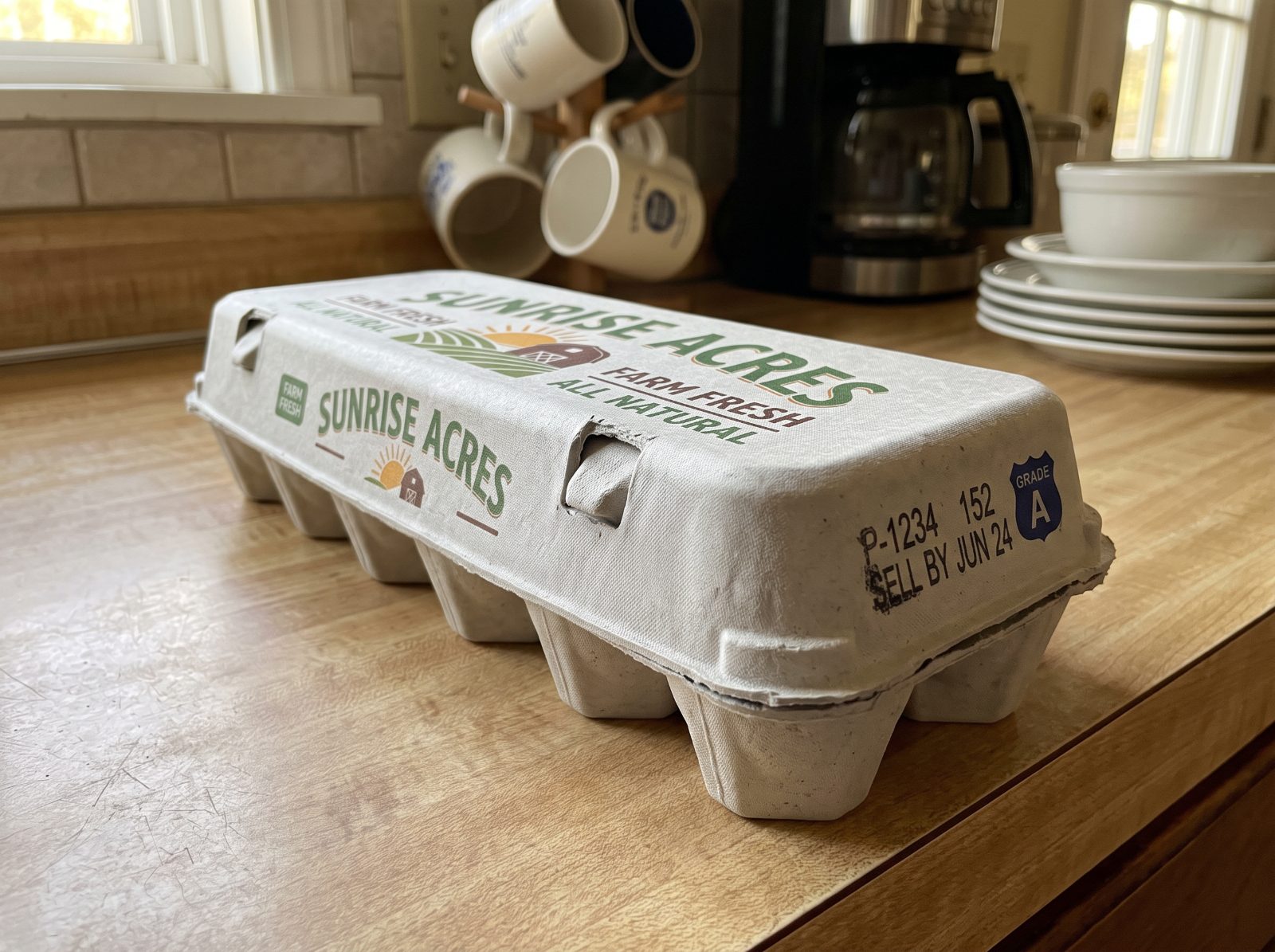
At home you turn the carton over. Grade A. Plant P-1234. Packed on day 152.
The words on the front are still on the front. Nothing behind them.
You look for the part about the outdoors. There's a barn and a meadow printed on the lid — and no claim anywhere on the carton.
Outdoor access starts at free-range. This carton makes no housing claim at all.
Transcript
{{ tx10A }}
You're still in the aisle, though. The cart isn't at the register yet.
Read this, then head back to the aisle.
There's a rule behind it
Tells you nothing about this carton
Farm Fresh · All Natural · Happy Hens · No Hormones Added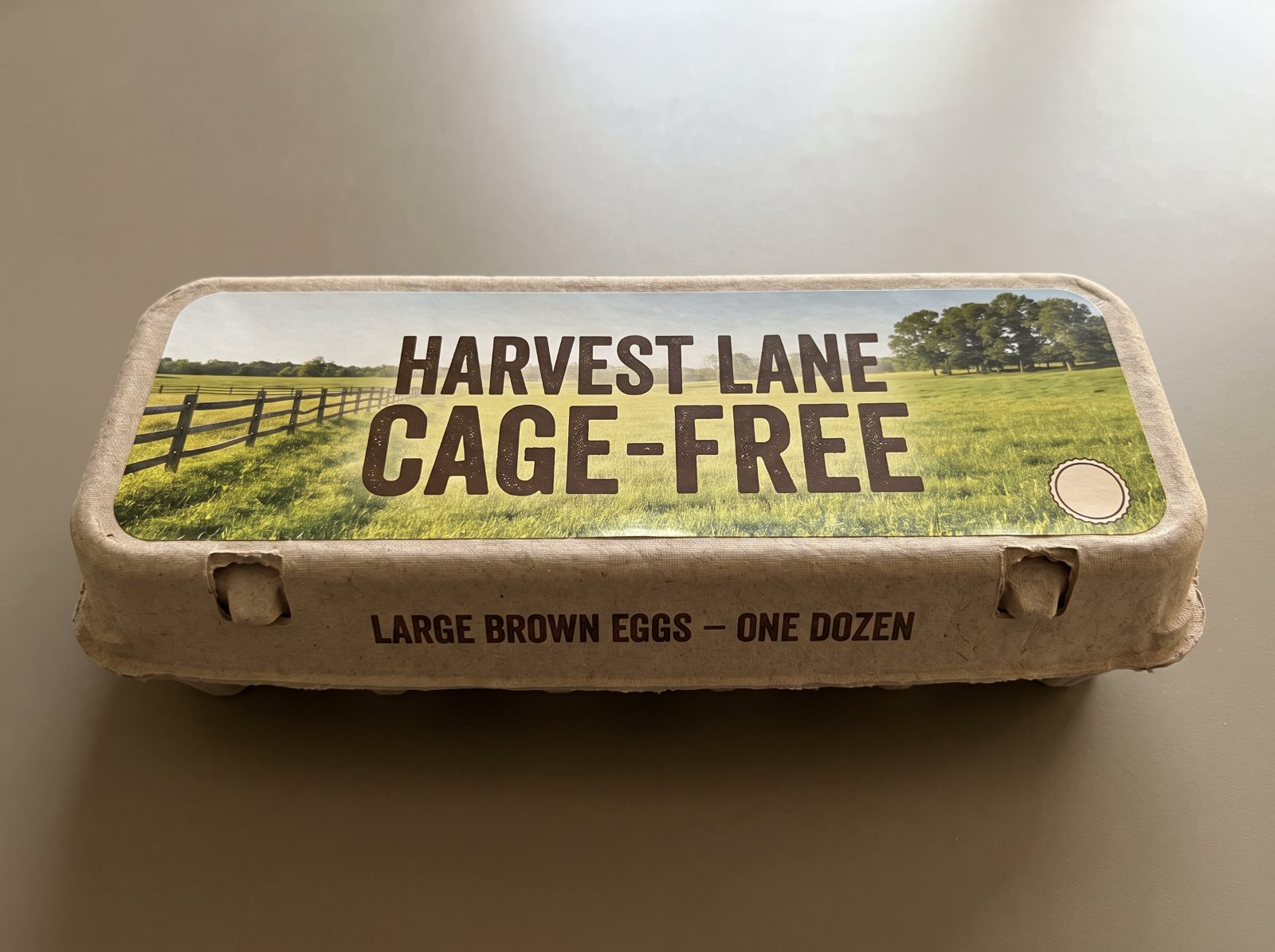
The photo on the carton shows a field. The claim says cage-free.
Cage-free means indoors.
Transcript
Cage-free is a real claim with a real definition, and on a USDA-graded carton the USDA verifies it on site at least twice a year. One thing to keep straight, though: cage-free means no cages, indoors. The outdoors starts one rung up, at free-range — and that photo of a field on the front isn't a claim, it's a picture. What you bought is still a genuine step: the housing this carton describes is the one estimated to cut a hen’s time in disabling pain by nearly two-thirds, for about a dollar twenty-nine over the cheapest carton in the aisle.
{{ capB }}
{{ head10C }}
{{ body10C }}
Transcript
{{ tx10C }}
Outdoor access — correct for this claim.
{{ capC }}
The carton in your cart does carry a defined claim.
Farm fresh and all natural aren't printed on it — and if they were, they still wouldn't tell you anything.
Transcript
Good news about this one: the claim on the front is a defined claim, and it's doing real work. But the words you were reading for — farm fresh, all natural — aren't on this carton. And here's the part worth keeping, because it's the part that travels: if they had been printed there, they still wouldn't have told you how the hens lived. Nobody regulates them. What actually told you something was the claim you didn't mention. Next aisle, that's the one to look for.
{{ dTierLabel }}
What you actually bought — a defined claim
Farm Fresh · All Natural
What you read for — no rule behind it
Read this, then head back to the aisle.
Four questions before you go. All four are things you just used in the aisle.
Transcript
Four questions, and every one of them is something you just did standing in front of those cartons. At the end you'll see your two opening answers next to where you are now.
{{ loupeRead }}
{{ postQ }}
{{ postFb }}
Your first answer → your answer now
{{ gate11 }}
Next time: turn the carton over, then read the front for a claim with a rule behind it.
What you do with that is yours.
Transcript
One thing to take with you. Next time you're in that aisle, turn the carton over — and then read the front for a claim that has a rule behind it. Cage-free, free-range, pasture-raised, or a certifier's seal. Farm fresh, all natural, and happy hens are decoration. Hormone-free is regulated — and true of every carton, so it can’t tell you anything either. There are several ways to use that, and they're all legitimate. You can just read the labels this time and buy exactly what you always buy. You can try one verified cage-free carton a month. You can switch. In the US, about forty-six percent of hens are already out of cages, which means about half are not — and in Canada, four out of five are still in them. Wherever you land, you're now someone who reads the aisle instead of the adjectives. Start with the next carton.
Pick a commitment — or skip. Both are fine.
End of module · 12 of 12
Start with the next carton.
What this module records
Everything below is stored in this browser only. It is never sent anywhere — this course has no analytics endpoint, and the only requests it makes are for its own audio and images.
This module records:
- which screens you reached, and when
- your answers to the two opening questions and the four closing ones
- which carton you put in the cart, and the reason you gave
- whether you turned the cartons over, opened the label help, or expanded a callout
- how far you looked along the aisle
- whether narration was switched on
- which commitment card you picked, if any
It also stores a random id in this browser so that a second visit can be told apart from a first one. It is not tied to your name, your email, or anything else about you — it looks like this: {{ dataUid }}
{{ dataCount }}
This record is yours and it is already under your control — clearing site data in your browser removes it too.